Mulberry Leaf Tea and Blood Sugar: What 43 CGM Tests Showed Me
In my first test, one cup of mulberry leaf tea five minutes before 150g of white rice cut my glucose rise from +74 to +18 mg/dL. Mulberry leaf contains DNJ, a compound that slows how fast carbs are broken down in the gut. Human studies support a smaller post-meal rise — but the effect depends a lot on how much DNJ you actually get.
I’ve worn a continuous glucose monitor (CGM) for years — 2,000+ readings so far. My yardstick never changes: 150g of plain white rice, nothing else, then I watch the curve for two to three hours. On its own, that rice raises my glucose by +74 mg/dL (+4.1 mmol/L).
One morning I drank a cup of mulberry leaf tea, waited five minutes, and ate the same rice.
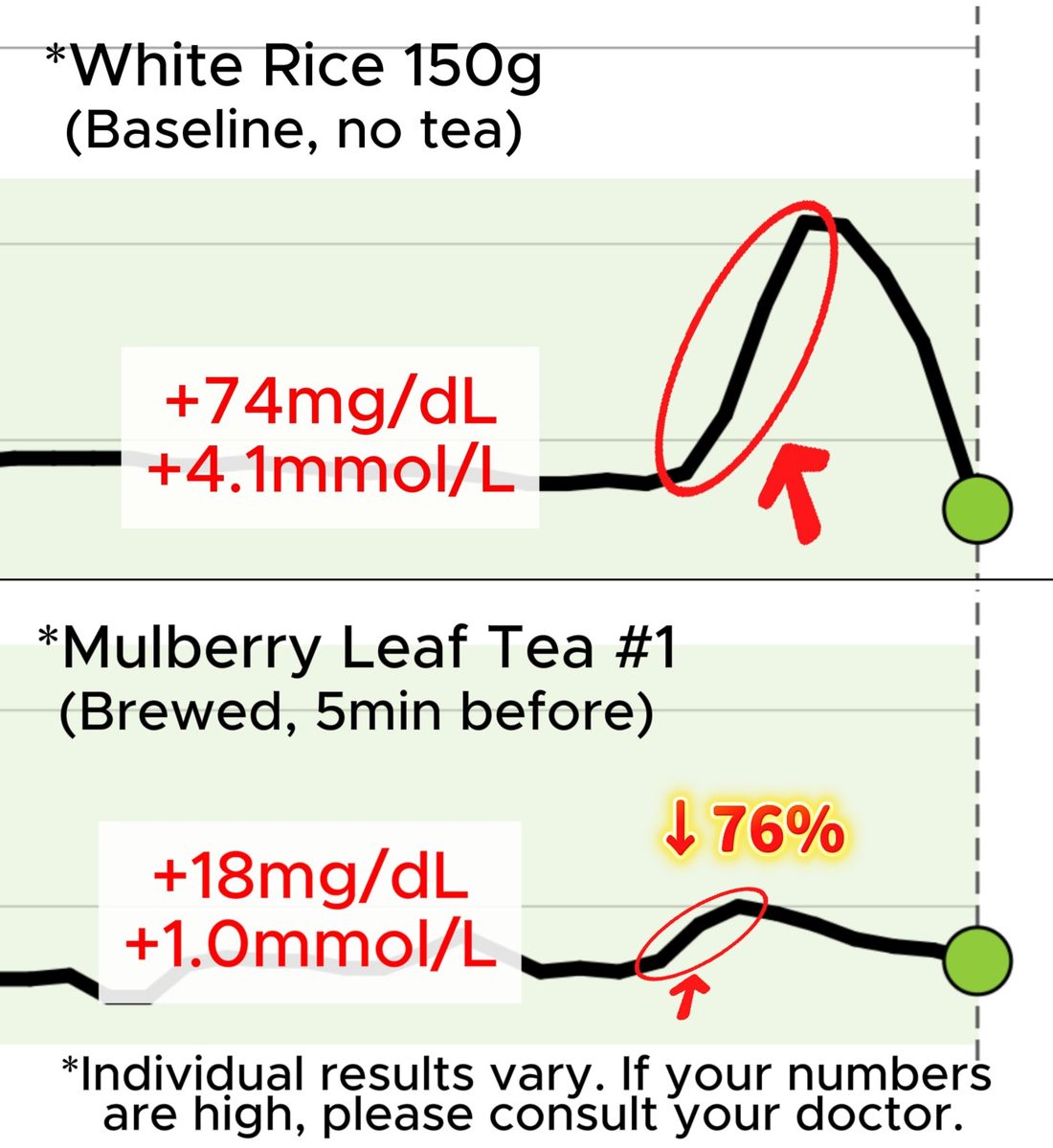
The rise was +18 mg/dL. About a quarter of the rice-only spike.
My first reaction wasn’t excitement. It was suspicion. So I tested it 42 more times.
What is mulberry leaf tea?
Mulberry leaf tea — kuwacha in Japanese — is made from the leaves of the white mulberry tree (Morus alba). In Japan it’s an everyday drink: you can buy it at supermarkets and drugstores as tea bags, fine powder or small tablets. It’s caffeine-free and tastes mild and grassy, a bit like a light green tea.
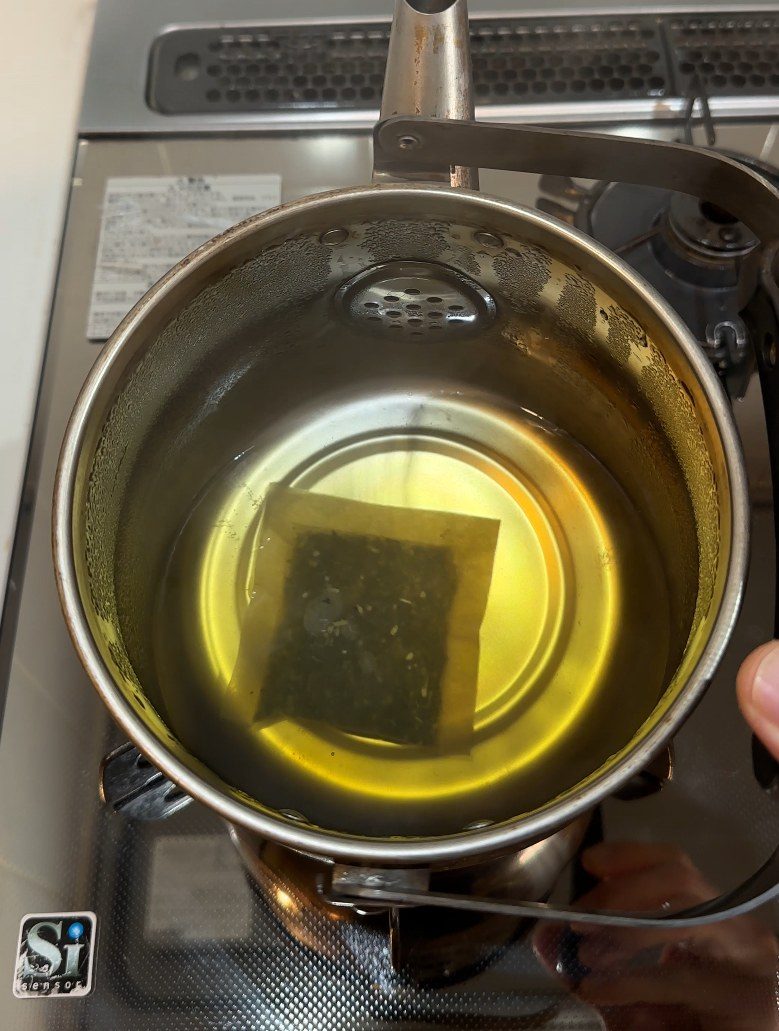
Outside Japan, most people only meet mulberry leaf as a supplement capsule — if they meet it at all.
How it works: DNJ
The key compound is DNJ (1-deoxynojirimycin). Mulberry leaves are one of the few plants that contain it in meaningful amounts [1].
When you eat rice, bread or noodles, enzymes in your small intestine break the starch down into glucose so it can be absorbed. DNJ blocks one of those enzymes (alpha-glucosidase). The carbs get broken down more slowly, so glucose enters the blood more slowly — and the post-meal peak comes out lower.
Mulberry leaf doesn’t “burn” sugar. It slows the door that sugar walks through.
Two things follow from that:
- Timing matters. DNJ has to be in your gut at the same time as the carbs. Drinking it hours before a meal makes little sense.
- Dose matters. The more DNJ that reaches the gut with the meal, the stronger the effect — up to a point.
What the research says
In a well-known Japanese human study, people took a DNJ-enriched mulberry powder before eating sugar. The rise in blood glucose was clearly smaller at doses giving 12 mg of DNJ and above; the smallest dose (6 mg) didn’t reach significance [2]. In Japan, “about 6 mg” is often quoted as a starting line.
A randomised, double-blind, placebo-controlled trial in the UK found that a standardised mulberry extract taken with a carb load reduced both the glucose and insulin response in healthy adults [3].
The catch: a normal cup of tea usually contains far less DNJ than those studies used. DNJ content varies several-fold between varieties and leaf parts, and most products don’t list it at all.
My test #1, in context
Before mulberry leaf tea, I’d tested plenty of drinks before the same rice. Almost none of them did much:
| Drink (before or with 150g rice) | Rise vs. rice alone |
|---|---|
| Rooibos tea | 10 mg/dL less |
| Coffee | 4 mg/dL less |
| Green tea | 12 mg/dL less |
| Mulberry leaf tea (test #1) | 56 mg/dL less |
It wasn’t in the same league. Which is exactly why one test wasn’t enough.
Why I ran 42 more tests
A single CGM reading can be luck: sleep, stress, the exact rice, the sensor itself. So I treated that morning as test #1 and kept going under the same conditions:
- Brewed tea — 8 tests, from normal strength up to 5x
- Powdered tea — 9 tests, normal up to 5x
- Powder with a real lunch — 7 tests, including a beef bowl
- A concentrated overseas capsule (12.5 mg DNJ each) — 6 tests
- Cheap Japanese mulberry tablets — 6 tests
- My refined everyday method — 6 tests
- Powder mixed into unsweetened soy milk — 1 test
43 tests in total. Some results were great. Some were a letdown. The biggest lessons were about form (brewed vs. powder), timing and how much — not whether mulberry leaf “works” in general.

The full record — every test, every graph and how I drink it now — is in the complete edition.
How to try it outside Japan
You don’t need Japanese products. Look for:
- Mulberry leaf tea bags — Asian grocers, health food shops, online. Brew them hot and properly; a quick dunk extracts less.
- Mulberry leaf powder (Morus alba) — you drink the whole ground leaf, so nothing is left behind in a tea bag.
- Mulberry leaf extract capsules — check whether the label lists DNJ in mg.
Ignore the big “extract 1,000 mg” number. Look for “mg of DNJ”.
Drink it right before or with a carb-containing meal, not hours earlier.
Side effects and who should be careful
Because DNJ slows carb digestion, some carbs can reach the large intestine and ferment there. At higher amounts that can mean gas, bloating or loose stools. Start small.
Mulberry leaf works in a similar way to some blood sugar medications. If you have diabetes, take any medication, or are pregnant or breastfeeding, talk to your doctor before trying it.
Sources
- Asano N, et al. Polyhydroxylated alkaloids isolated from mulberry trees (Morus alba L.) and silkworms (Bombyx mori L.). J Agric Food Chem. 2001;49(9):4208–4213. doi.org/10.1021/jf010567e
- Kimura T, et al. Food-grade mulberry powder enriched with 1-deoxynojirimycin suppresses the elevation of postprandial blood glucose in humans. J Agric Food Chem. 2007;55(14):5869–5874. doi.org/10.1021/jf062680g
- Lown M, et al. Mulberry-extract improves glucose tolerance and decreases insulin concentrations in normoglycaemic adults: results of a randomised double-blind placebo-controlled study. PLoS One. 2017;12(2):e0172309. doi.org/10.1371/journal.pone.0172309
FAQ
Does mulberry leaf tea lower blood sugar?
It doesn't lower your baseline the way a medication would. What it can do is make the rise after a carb-heavy meal smaller, because DNJ slows the breakdown of carbs in the gut. In my own CGM tests the rise after white rice was clearly smaller with mulberry leaf than without.
When should I drink mulberry leaf tea?
Right before or with a carb-containing meal. DNJ works in the gut while the meal is being digested, so drinking it hours before or after the meal makes little sense.
Is mulberry leaf tea safe?
It's an everyday drink in Japan, but larger amounts can cause gas, bloating or loose stools, because some carbs reach the large intestine undigested. It works in a similar way to some diabetes medications, so if you take any medication or have diabetes, talk to your doctor first.
Where can I buy mulberry leaf tea outside Japan?
Look for mulberry leaf tea bags or mulberry leaf powder (Morus alba) at Asian grocers, health food stores or online. Extract capsules are also common. If the label lists DNJ (1-deoxynojirimycin) in mg, that tells you far more than the total 'extract mg'.
Get the next experiment
One food or habit at a time, measured on my own CGM. Every result — including the ones that make me look bad.
Subscribe free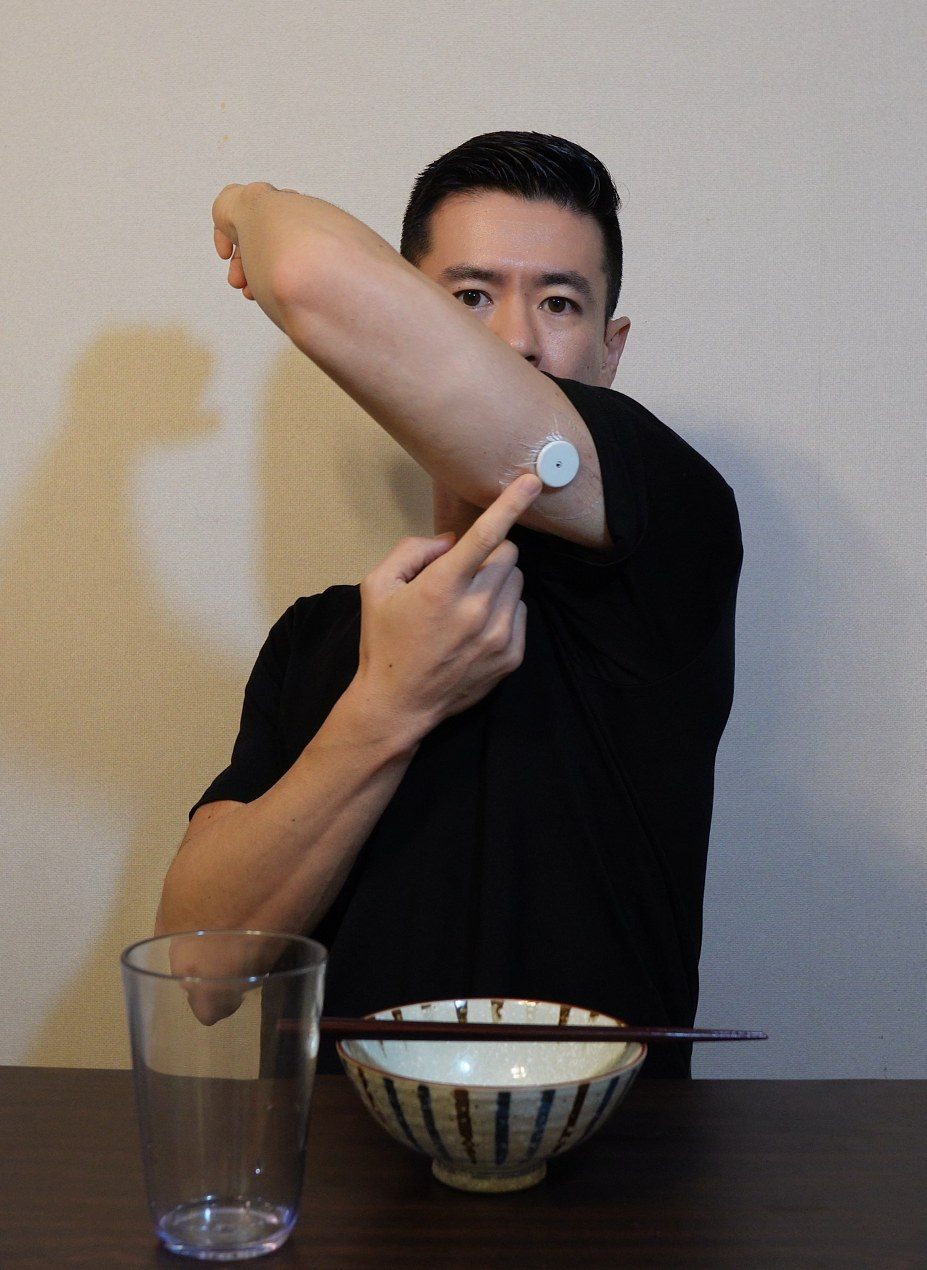
Ash Sato is a sports nutritionist and personal trainer in Japan. He has logged 2,000+ CGM readings testing everyday Japanese foods and habits. More about Ash
These are one person's CGM records and general information — not medical advice. Results vary from person to person. If you have diabetes, take medication, or are pregnant or breastfeeding, talk to your doctor before changing what you eat or drink. How to read this site